
Recovery over destruction
Stop sinking usable vessels.
We’ll take it from here. After the boarding. After the clearing. Hull, fuel, and gear — recovered, not dumped into the Pacific.
Eastern Pacific · Interdicted · Boarded · Cleared · Awaiting recovery
The desire that started this00The spark
“I’d have paid your fuel bill to take me out to that boat and would have taken it off your hands without spilling more oil and fuel into the waters. That’s just wasteful.”
@TheBeardFiles · 4 September 2026 · in reply to SOUTHCOM
On 3 September 2026, U.S. Southern Command announced that Joint Task Force Western Hemisphere had interdicted a vessel operating as a floating refueling station for illicit trafficking in the Eastern Pacific. Boarded. Searched. Cleared. Then sunk.
That post named the better ending. AetherHull exists to make it real: a company ready to take those hulls off the military’s hands the moment they are clear.
01The problem
Interdict. Clear. Sink. Then watch a usable ship disappear.
The boarding is the hard part, and U.S. forces already do it. The waste is what happens after: a cleared vessel treated as trash because the default next step is a charge on the hull.
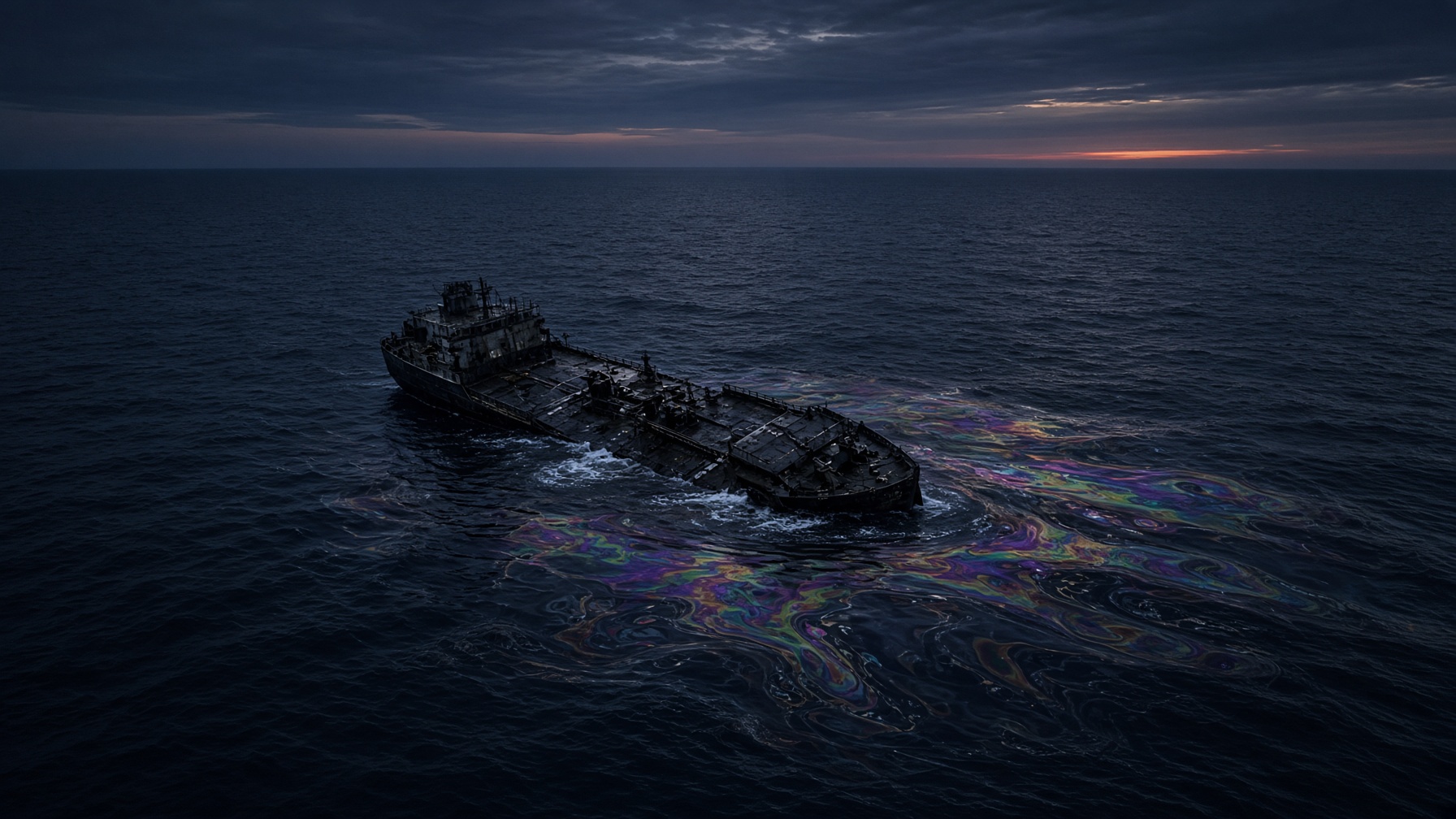
The hull
A steel body that still floats, still steers, still has a working plant. Sent to the bottom because there was no one standing by to take it.
The fuel and oil
Whatever remains in the tanks does not vanish with the ship. It goes into the water. Every scuttling is also a spill.
The equipment
Pumps, radios, engines, generators, navigation gear. Destroyed with the hull instead of stripped, inventoried, and reused.
02The choice
Sink it, or recover it.
Drag the handle. Same ocean. Two endings. Only one of them spills the tanks and writes off the hull.

Sink it
Recover it
Sink it
- Hull written off
- Fuel and oil in the water
- Equipment destroyed with the ship
- The default, because no one is standing by
Recover it
- Hull taken under tow
- Tanks contained and offloaded
- Gear inventoried in the twin
- AetherHull already on the way
03The AetherHull proposal
A recovery company built for the hour after the boarding.
Not a protest. A capability. Specialized crews, tugs, and containment gear standing by to take cleared vessels off the military’s hands — then handle everything that follows.
We take it from here
Once the vessel is boarded and cleared, AetherHull takes possession. The military does not have to keep a prize crew, a tug, or a scuttling charge on the calendar.
We pay the bill if we have to
Fuel to get us on scene. Towing. Containment. If the alternative is sinking a working hull, we will cover the operational cost to recover it instead.
We stop the spill
Booms, pumps, tank security. Remaining fuel and oil come off the water instead of into it. The ocean is not a disposal site.
We put the asset back to work
Strip what cannot be saved. Refit what can. Lawful sale, donation to a partner navy or coast guard, or conversion. The hull earns its keep again.
04How it would work
Five steps from a cleared deck to a hull that works again.
- 01
Interdict and clear
U.S. forces board, search, and clear the vessel. People and contraband come off. That work stays theirs. We do not ask to be in the boarding.
- 02
Hand it to AetherHull
While the boarding team is still on scene, we take the call. If a crew is already in theater, we steam. If not, we sprint. The default is no longer a scuttling charge.
- 03
Contain, then move
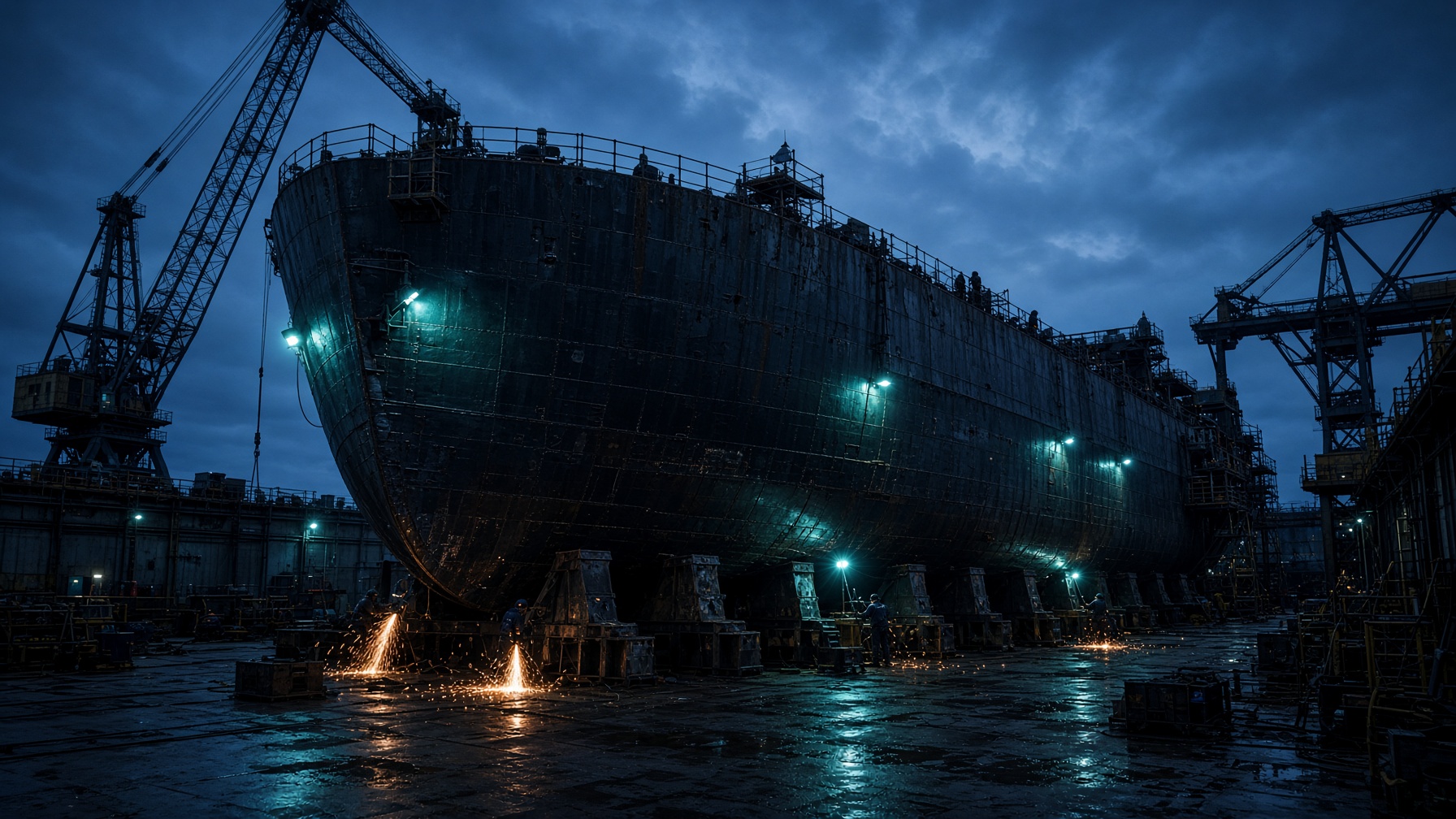
Booms in the water. Remaining fuel and oil pumped or secured. The hull is taken under tow and removed from the operational area so the task force can leave.
- 04
Inspect and twin
Drones, hull survey, and a digital twin of the vessel. Chain of custody from the moment we take the line. Nothing undocumented, nothing informal.
- 05
Strip, refit, or sell
Lawful reuse. Partner-nation patrol craft. Sale of what can be sold. Scrap of what cannot be saved. The ending is productive, not a hole in the ocean.
05Technology advantage
2026 tools that make a sprint-to-scene recovery realistic.
Salvage used to mean a slow, heavy industry. The gap now is speed and proof: get there while the boarding team is still on deck, document everything, and keep the oil in the tanks. That is a software problem as much as a seafaring one.

Survey drones
Air and surface drones map a hull in hours, not days. Damage, tanks, deck gear, and hazards — seen before a crew steps aboard for recovery.
Digital twins
Every recovered vessel gets a living model: structure, systems, residual fuel, and chain of custody. The twin travels with the asset from scene to yard.
AI sprint logistics
Which tug, which port, which weather window. Routing that treats recovery as a time-critical operation, not a salvage job that can wait a week.
Containment systems
Rapid-deploy booms, skimmers, and tank-inerting kits designed for a cleared hull that still has product in it — so the Pacific does not.
Chain of custody
Sealed, time-stamped record from hand-off to final disposition. What was on the ship, what came off, who held it, and where it went.
Remote hull watch
Once under tow, sensors and cameras keep a live picture of list, tanks, and weather so a recovered prize does not become a new casualty.
06Call for partnership
Do not make sinking the default because no one else is in the water.
This is a standing offer to SOUTHCOM, the Coast Guard, the Department of Defense, Joint Task Force commanders, and partner governments: when a vessel is boarded and cleared, call us. We will take the hull, contain the tanks, and get it out of your operating area.
You keep the interdiction. We take the aftermath. The ocean keeps the oil that used to go into it, and a working ship does not become a reef by policy.
07Next step
Start a recovery conversation.
If you command an interdiction, write policy for one, or can put a tug and a boom in the same ocean — write to us. Tell us the theater, the constraint, and what a hand-off would have to look like.
- Operations
- [email protected]
- Partnerships
- [email protected]
- Watch floor
- Eastern Pacific · Caribbean · standing up